
3 Ways Screens Mess With Your Posture (And What You Can Do About It)


In Lancaster, where historic brick buildings now house marketing agencies and tech startups, we’re seeing a shift in the "typical" chiropractic patient. It’s no longer just factory workers and farmers walking through our doors—it’s the Millersville student typing papers at 2 AM, the graphic designer grinding through deadlines downtown, and the remote consultant perched on a dining chair in Neffsville.
What do they all have in common? They’re feeling the effects of screen-centric life, and their spines are staging a quiet rebellion.
Our bodies weren’t designed for eight hours of static scrolling or laptop hunching. Here are three of the most common screen-related posture problems we see—and what you can start doing today to counteract them.
1. The "Forward Head Shift" (aka Tech Neck/ Bad Posture)

What Happens: As you lean toward your screen, your head drifts forward, adding extra strain on your neck. For every inch your head shifts forward, your neck takes on an additional 10 pounds of pressure. That’s like asking your spine to carry a bowling ball all day—no thank you.
The Consequence: Chronic tension in your upper traps, a flattened neck curve, and long-term spinal wear and tear.
The Fix: Try a Wall Reset: Stand with your back against a wall, heels a few inches out. Without tilting your chin up, bring the back of your head toward the wall. Hold for 30 seconds.
It’s like GPS for your spine.
2. Rounded Shoulders & Caved Chest From Bad Posture
What Happens: Typing, texting, tapping—all of it pulls your arms (and posture) forward. Your chest muscles tighten while the ones between your shoulder blades weaken.
The Consequence: This "closed" position limits your breathing capacity and can trigger low-level stress in your nervous system—even when you feel calm.
The Fix: The Doorway Stretch. Place your forearms on either side of a doorway and lean forward gently to open up the chest. It's simple, effective, and a great excuse to leave your desk for 30 seconds.
3. "Dead Butt" Syndrome (Yes, It's a Thing)
What Happens: When you sit for hours, your hip flexors tighten and your glutes go on vacation. This leads to something called anterior pelvic tilt, where your pelvis tips forward and your lower back takes the hit.
The Consequence: Low back pain that seems to appear out of nowhere—even if all you did was answer emails all day.
The Fix: Use a standing desk when possible. If not, set a movement alarm every 30 minutes. Stand up, squeeze your glutes for 10 seconds, and repeat. Bonus points if you do a quick stretch, too.
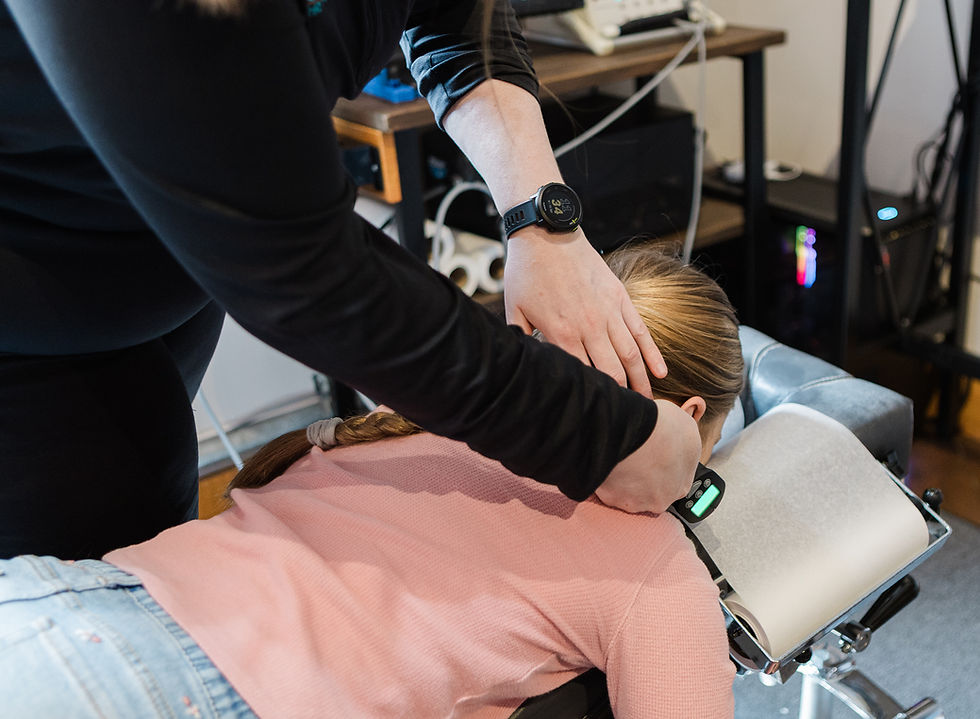
Beyond the Quick Fix: How OWL Chiropractic Helps
Listen, stretches and standing desks are great—but if your spine has already shifted into a defensive, hunched pattern, you're going to need more than a few posture hacks. That’s where we come in.
At OWL Chiropractic, we:
Restore Alignment: We gently guide your spine back into a position that supports head and body balance.
Relieve Nerve Pressure: So your muscles can actually relax instead of staying in fight-or-flight mode.
Personalize Your Workspace: We’ll help you adjust your setup so you're not undoing your progress every Monday morning.
Your Nervous System Is Listening
Your posture is a mirror of your nervous system. If you're stiff, foggy, or dragging through your afternoons, it might not be about energy drinks or willpower. It might be your spine.
Don’t let your devices run the show. With smarter habits and structural support, you can stay tech-savvy without sacrificing your spine.


Comments